Job & shipment operations
Air export, sea export, air import and sea import on one record set — master and house documents, containers, parties, routing, vessels and flights, with per-branch and per-year job numbering.
Freight software is an unusually unforgiving domain: master and house bills, containers, multi-currency charges, and a government that expects every invoice reported correctly. We know it because we built a complete freight ERP and now run it for forwarders in Pakistan.
Most software teams meet freight forwarding for the first time on your project, and you pay for that education. We arrived at it the same way — but we finished, and then kept going: the system we built for our first forwarder became Cargonio, a product we own, sell and support.
That means we already know what a house bill is, why a job number is per branch and per fiscal year, why a finalised invoice must be voided rather than deleted, and what happens when a government endpoint is down on the afternoon your invoices are due. Those are the questions that usually surface in month three of a build.
Air export, sea export, air import and sea import on one record set — master and house documents, containers, parties, routing, vessels and flights, with per-branch and per-year job numbering.
Local and international invoices, charge codes, credit notes and refunds, in multiple currencies, tied to the shipment they belong to rather than typed again into an accounts package.
PRA and FBR e-IMS reporting: tax calculated, invoices fiscalized one at a time or in bulk, official fiscal numbers stamped back onto the record, and every submission logged for audit.
A double-entry core underneath the freight — chart of accounts, vouchers, banking and financial statements — fed automatically when a document is finalised, and reversed cleanly when it is un-finalised.
Freight companies are businesses too. Employees, attendance, leave, payroll and an employee self-service portal, in the same platform as the shipments rather than a second system nobody reconciles.
Operational, MIS and financial reports with filters, grouping, totals and CSV export — written after watching someone export to Excel and pivot it by hand.
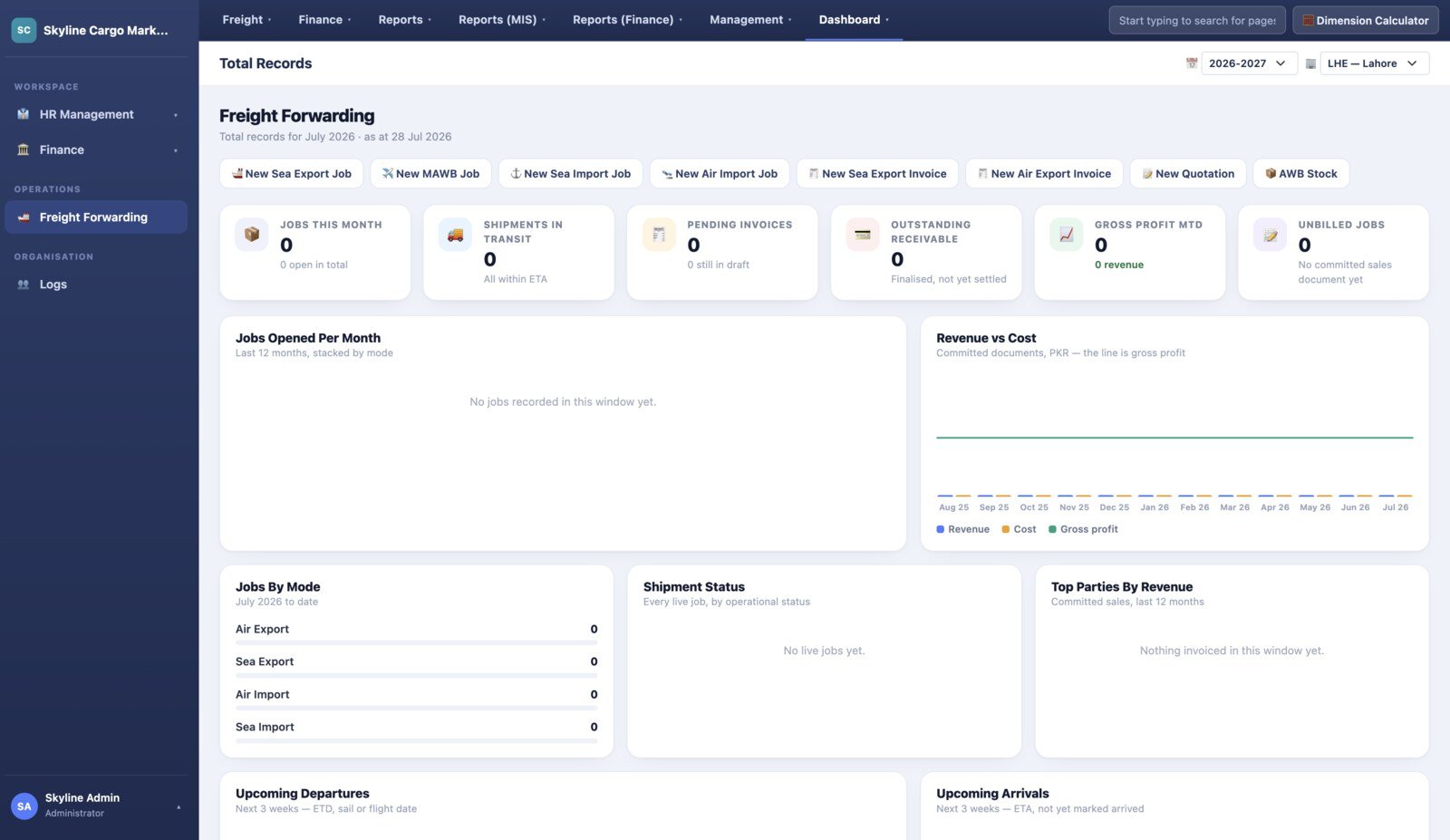
Sea and air import/export operations, invoicing and government-fiscalized tax reporting — our first freight client.
Read more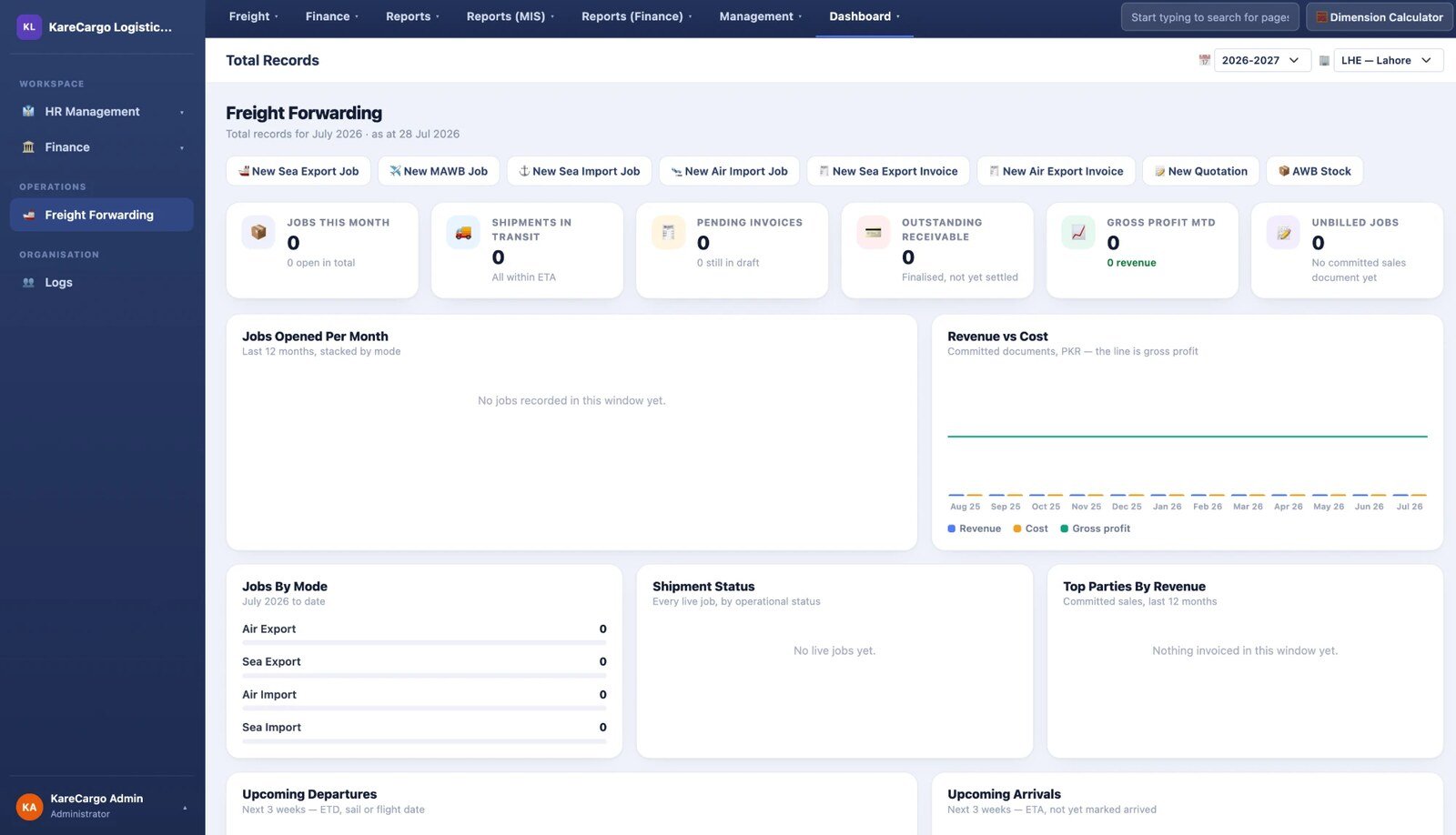
The full stack from day one — freight operations and invoicing plus HR, payroll and accounts on one platform.
Read more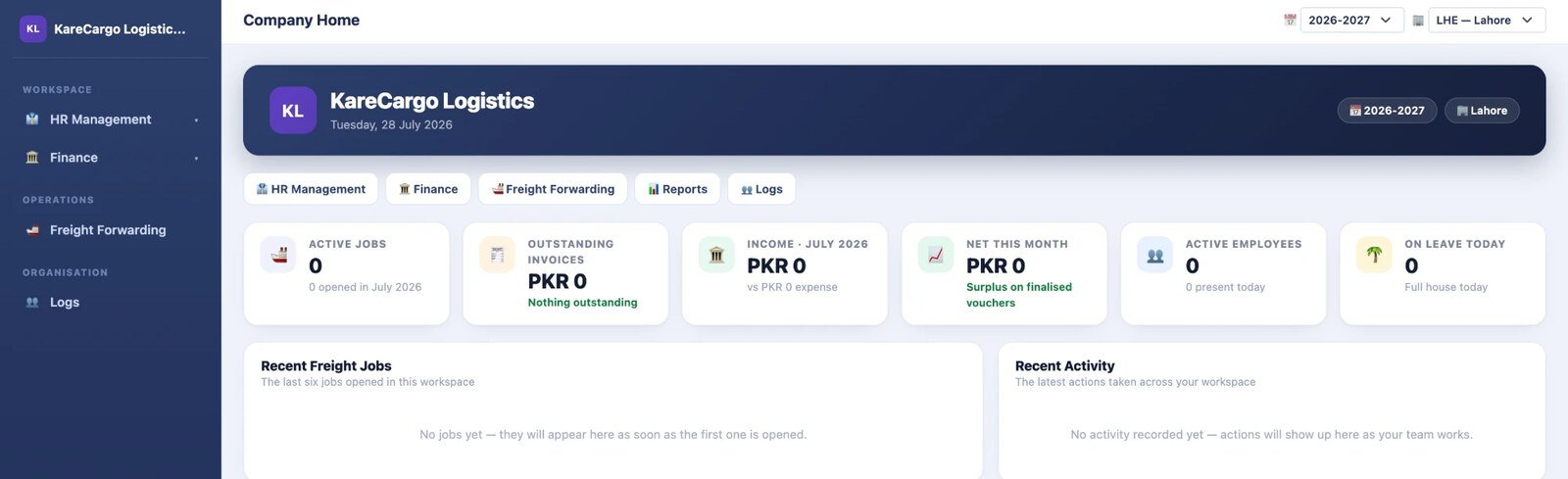
The multi-tenant freight ERP behind both — from booking to balance sheet, licensed to forwarders.
Read moreTell us your lanes, your volumes and what your current system will not do. We will show you Cargonio running and be straight about whether it fits or whether you need something built.